Economics
BA (Hons)
Undergraduate degree - single honours
- UCAS codes: Institution B20, Course L100 or L101 (with professional placement year)
Explore your passion for economics on this inclusive BA course. You'll examine topics that matter to you through portfolio-style assessments in a collaborative and creative environment.
- Enjoy the freedom to explore economics creatively on this BA degree course and discover your own passion for economics.
- Explore your interests and build a showcase for future interviews through our creative portfolio-style assessments.
- Benefit from strong industry links on a course filled with real-life situations from a wide range of global backgrounds and work experience opportunities.
Economics at Bath Spa University is about becoming the kind of economist you want to be, with space to experiment, debate, and bring your own interests into the classroom. What sets Economics apart is its commitment to creativity, personalisation, and close-knit learning, meaning you will study Economics in a place that values innovation, diverse viewpoints, and the courage to challenge conventional thinking.
BSU values social inclusion, and we pride ourselves on the commitment to empower all students to succeed in higher education, and this is achieved through individualised one-to-one guidance, and continuous feedback throughout your degree.
The structure of our BA Economics degree is intentionally student-centred. You make choices about your research topics, project formats, and areas of special interest. Modules are designed to scaffold together smoothly, giving you a clear and supportive progression from foundational knowledge to more advanced, applied economic thinking.
Our strong emphasis on community, and small group teaching, means you study in an environment where you are known, supported, and encouraged to bring your perspectives into the classroom. Film nights, interactive workshops, and academic events create a culture where students feel confident contributing to discussions and exploring new ideas.
Above all, the university’s creative ethos means that Economics isn’t taught as a rigid formula, it’s approached as a dynamic, global, people-centred discipline, giving you the space to grow into a thoughtful, adaptable economist, with a voice of your own.
Please note: This course will run from September 2027.
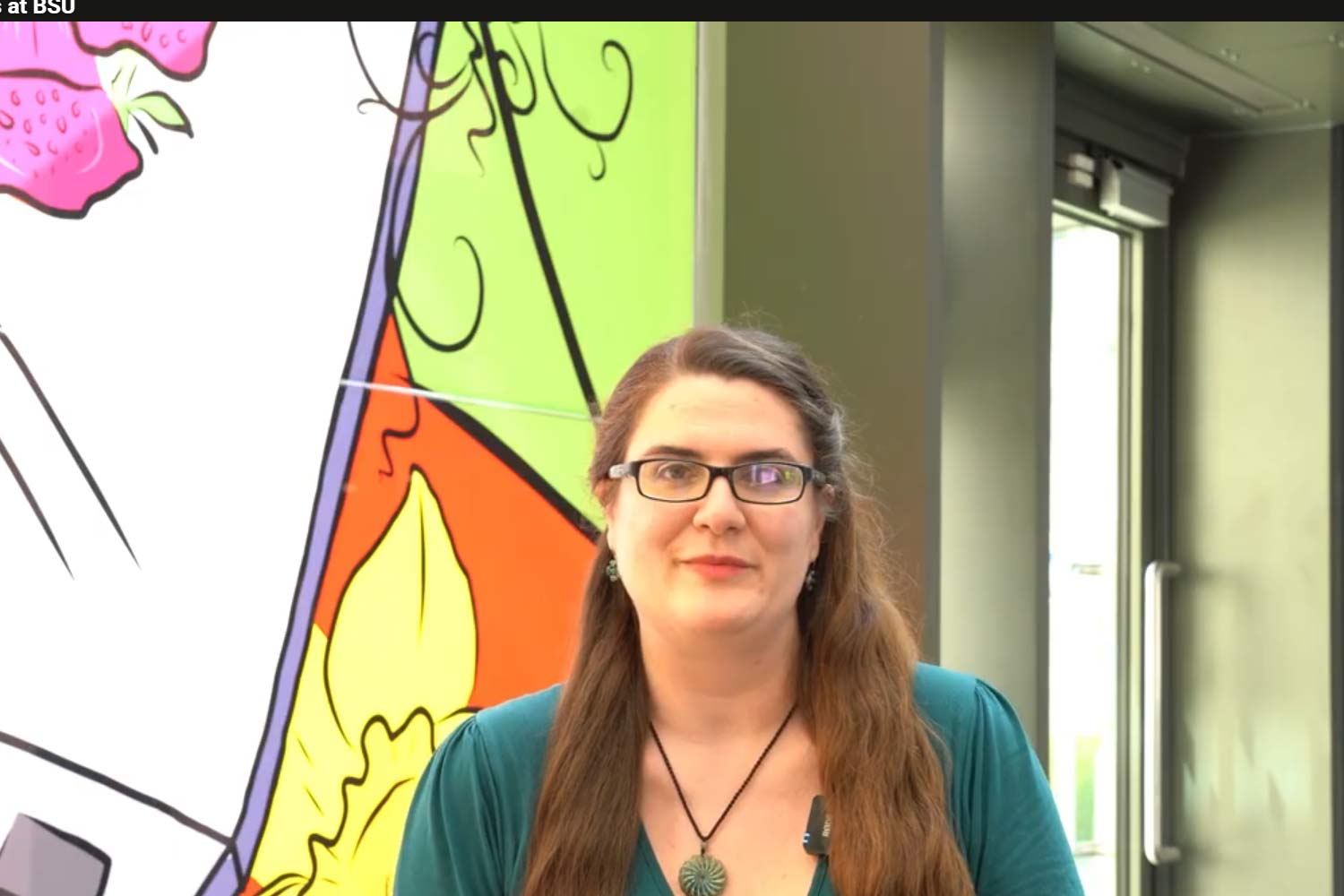
Economics at its core is the study of how individuals, businesses, governments, and nations choose to allocate scarce resources. This Economics undergraduate degree will introduce you to the core principles of economic thinking. As it’s a BA, it’s designed to be accessible to all students – you don’t need a background in Maths or Economics and your learning in these fields will be supported.
This course emphasises interpretation, debate, and the practical application of economic ideas to contemporary issues. You’ll explore how economic ideas interact with politics, law, business, and social change and engage with a wide range of global perspectives.
We place a strong emphasis on creative and collaborative problem-solving and you’ll benefit from the supportive environment created by small-group teaching and regular feedback.
A key feature of this Economics degree course is its creative and portfolio-based approach to assessment. You’ll have the opportunity to investigate your own real-world topics.
Through this combination of critical thinking, communication, and applied research experience, graduates develop the skills needed to build a successful career in a range of industries depending on their choices. You’ll also gain valuable professional experience through a range of flexible work placement options.
Year one
In your first year you'll study fundamental modules in economics, statistics, business, finance and entrepreneurship to help establish a common core of knowledge.
Your economics modules will introduce you to neoclassical theory but also to its applications in a range of topics, and encourage you from the start to explore current events and industries that you are interested in.
The statistical module will focus on teaching Excel skills and graphical methods of analysing economic data, rather than pure maths. You'll have the opportunity to expand your knowledge by engaging with interdisciplinary modules in business, finance and entrepreneurship. This expansion will give you a holistic understanding of the world in which economics operates.
Year two
In your second year you'll develop a more in-depth understanding of key theories in micro and macro economics. You'll explore different perspectives of political economics being used globally and learn how to design and assess effectiveness of economic policies in areas such as trade, energy, social policy etc.
In addition, you'll further advance your numerical, digital and analytical skills. Optional modules offer the ability to customise your journey and this is when you can choose to do a year-long professional placement or a shorter work placement module.
Year three
Your third year focuses on developing your research skills through modules exploring contemporary issues and the many different tools available to investigate them, sustainability from a business or law perspective and your final research project.
You'll also have further customisation opportunities this year with even more optional modules, allowing you to tailor your learning to your interests. You'll also have the opportunity for a summer work placement.
At BSU, our courses are designed to equip our graduates with the knowledge and skills they’ll need for the real world. To do this, we are continually improving our courses by responding to feedback from students and other stakeholders. This may mean changes may be made to the curriculum. You’ll always be given notice of any such changes.For more information on how we approach such changes at the university, please read our policies on
A distinctive feature of the programme is our creative, portfolio-style assessments.
Students choose real-world topics that matter to them and present their findings using a range of formats that reflect how economics is communicated today. These could include:
- digital reports
- policy briefs
- website creation
- data analysis projects
- short form videos
- evaluative conversations
- live debates
- podcast interviews.
We offer variety in the way we teach. Lectures, seminars, workshops and tutorials are designed to help establish a foundation of knowledge.
The standard teaching patters are in-person two hours lectures and two hours seminars, but modules will utilise this time in different ways to best suit your learning.
Guest lectures, research workshops, computer-lab sessions, one-to-one tutorials and field trips are arranged on a regular basis across your modules.
Through our Virtual Learning Environment teachers will introduce you to a variety of resources, from academic papers and texts to movies, videos, news articles and datasets.
To find out more about how we teach and how you'll learn, please read our information on Your Learning and Teaching at BSU.
Social media
Follow @BSUBusinessschool on Instagram to read our latest news and find out more about Economics and the Business School at BSU.
Opportunities
The economics learning community is supported socially with our film nights and economics-focused trips, which help form lasting friendships, as well as deepen your understanding of economic institutions.
We organise a London Treasure Hunt for economics clues, we visit the Bank of England, the Royal Mint and the Welsh Senedd, and explore sustainability closer to home as well, in Newton Park.
But most importantly we offer personalised mentoring and support to help you shape your professional identity, and develop confidence in presenting your skills to employers.
Graduates pursue careers across government and economic policy (including the GES), business strategy, and entrepreneurship – we can also support you in developing your own consultancy or business.
Many go on to roles in local councils, working with SMEs or NGOs in advisory roles, join research institutes and think tanks, or work in consultancy and business analysis roles across a range of industries in the private sector.
Depending on their module choices, students can open opportunities in data and economic analysis, finance, accounting, and actuarial fields. The degree also provides a strong foundation for postgraduate study and academic research.
As part of your degree, you could study abroad on a placement at one of Bath Spa’s partner universities.
If you’re a full-time undergraduate student starting your first year at Bath Spa University, you can apply for the Certificate in Global Citizenship, which you’ll study alongside your degree.
You’ll gain global awareness and add an international dimension to your student experience, and funding is available. On successful completion of the programme, you’ll be awarded a Certificate in Global Citizenship. This is in addition to your degree; it doesn’t change your degree title or results.
Our careers team works closely with the programme to support your professional placement year, or summer placements and shorter internships during term time. Students can also gain paid experience within the university itself, in a range of roles that strengthen workplace skills, and have access to entrepreneurship funding to start their own business.
Due to our established employer networks, which include local businesses in the South West and national companies such as KPMG, public institutions such as the BANES council and HMRC, and policy organisations such as the Bath Law clinic, we are able to tailor opportunities around your interests as they emerge. The university and the Business School also arrange multiple networking events each year with these employers, as well as alumni and academics.

Develop a wealth of indispensable digital skills that you can take into your future career. One of only three Adobe Creative Campuses in the UK, we provide all Bath Spa students with access to the full Adobe Creative Suite, giving you the tools to communicate creatively, whatever your course or chosen professional field.
Professional placement year
The Professional Placement Year (PPY) provides you with the opportunity to identify, apply for, and secure professional experience, normally comprising one to three placements over a minimum of nine months. Successful completion of this module will demonstrate your ability to secure and sustain graduate-level employment.
By completing the module, you'll be entitled to the addition of 'with Professional Placement Year' to your degree title.
Before your PPY, you'll work to identify roles of interest and secure a placement. The Placements Team will support through timetabled sessions and 1:1 appointments.
As well as completing a minimum of 900 placement hours, you will complete two assessments demonstrating your skill development, growth in professional behaviours and how the PPY has impacted your future career aspirations.
Facilities and resources
You'll be taught at our Newton Park campus, which is located on the edge of Bath and offers a blend of modern and eighteenth-century buildings, with good access to the city while being nestled in the countryside. From your lectures, you’ll be able to visit the library, the Students’ Union, and access our student information and support teams, as well as many of our cutting edge facilities.
- Our Library offers a wealth of learning resources including books, journals, DVDs and an extensive range of electronic services. The Economics specific resources include access to electronic journal and news repositories, a range of databases (e.g. Bloomberg, Euromonitor Passport, Statista), software (e.g. Excel, Adobe Creative toolkit, Lucidchart) and professional networks.
- The Writing and Learning Centre provides support for your academic work, including feedback on written drafts and other help with academic writing.
- Our Virtual Learning Environment provides online access to learning materials such as lecture slides, assessment information, discussion boards and other resources.
- The Careers team run networking events and advisory workshops that explore your future options and the essentials of the job application process. They help you get experience by assisting with your search for work placements and paid part-time jobs while you're studying. When you're ready to progress into your chosen career, they can help you secure graduate-level employment, freelance opportunities, and funding for your own business ideas. Career support continues for years after you graduate with the dedicated Grad Support Unit.
- You’ll have free access to thousands of business, design and tech courses online via LinkedIn Learning.
- If English isn't your first language, our English Language Unit can help you improve your English, reach your full potential and boost your confidence.
- Our Student Wellbeing Services are available to support you through your learning.
Fees
| Student | Annual tuition fee |
|---|---|
| UK full time | TBC |
| UK part time | TBC |
| International full time | TBC |
Fee notes
Information on fees for courses starting in September 2027 will be available from September 2026.
Professional Placement Year
TBC
International fee information
Our fees for international students are organised into bands. For more information, please consult the tables on the international student fees webpage.
Additional course costs
You may need to pay additional course costs over and above your tuition fees, for example, for specialist equipment or trips and visits. Please check the course Programme Document (linked under the main image on this page) for details of any additional costs. You can also read our Additional Course Costs Policy for further information.
Funding opportunities
Please visit our Funding pages for an overview of the funding options that may be available, including scholarships and bursaries.
Interested in applying?
We’re looking for intellectually curious students who want to understand and analyse the economic issues shaping today’s world. You should be engaged with current affairs, open to new perspectives, motivated to explore complex global challenges, and interested in questioning how and why economic decisions affect individuals, businesses, and societies.
You don’t need any formal background in economics, but you should be ready to engage actively with the subject and build new skills over time. This means working with real-world evidence, interpreting data and trends, and communicating your ideas clearly and creatively in a variety of formats.
We accept a wide range of qualifications for entry to our undergraduate programmes. The main ones are listed below.
- A Level – grades BBB-BCC. No specific subject required.
- BTEC – Extended Diploma grades from Distinction Distinction Merit (DDM) to Distinction Merit Merit (DMM). No specific subject required.
- T Levels – grade Merit. No specific subject required.
- International Baccalaureate – a minimum of 32 points. No specific subject required.
- Access to HE courses – Access to HE Diploma or Access to HE Certificate (60 credits, 45 of which must be Level 3, at Merit or higher). No specific subject required.
All applicants will need to hold GCSE passes at Grade 4/C or above (or recognised equivalents) in English and Mathematics.
If you don’t meet the entry requirements above, we may be able to accept your prior learning or experience from outside of formal education. See our Accreditation of Prior Learning (APL) page to learn more.
English Language Requirements for International and EU Applicants
IELTS 6.0 - for visa nationals, with a minimum score of IELTS 5.5 in each element.
Course enquiries
For further information about the programme or entry requirements, please email us at admissions@bathspa.ac.uk.
Ready to apply? Click the 'apply now' button in the centre of this page.
Need more guidance? Head to our how to apply webpages.
A good way to find out which of the many sub-topics of Economics interests you might develop a passion for, is by following social media and Youtube accounts that post current information about the goings-on in the world such as:
- Bloomberg
- The Economist
- Financial Times
- Rethinking Economics
- World Economic Forum
- BBC News Economics etc.
You might be surprised by how much short-form and long-form content is available from reliable sources on the social media platform of your choice.
If you're interested in pre-reading, our recommendation is Edible economics: the world in 17 dishes by Ha-Joon Chang, for stories on a range of economic topics, innovatively explored alongside food. Also, the Freakonomics Movie is a good start and available to view online.
Course leader: Anca Baker
Email: a.baker@bathspa.ac.uk
- Award
- BA (Hons) Economics
- School/s
- Bath Business School
- Campus or location
- Newton Park
- Course length
- Three years full time, or four years full time with professional placement year.
- UCAS codes
- Institution Code: B20
- Course Code: L100 or L101(with professional placement year)
- Campus Code: A,BSU
Entry requirements
We accept a wide range of qualifications for entry to our undergraduate programmes. The main ones are listed under 'Typical offers' in the main column below. For combined courses, please check both subjects. If your qualification is not listed, please email admissions@bathspa.ac.uk with your specific details.