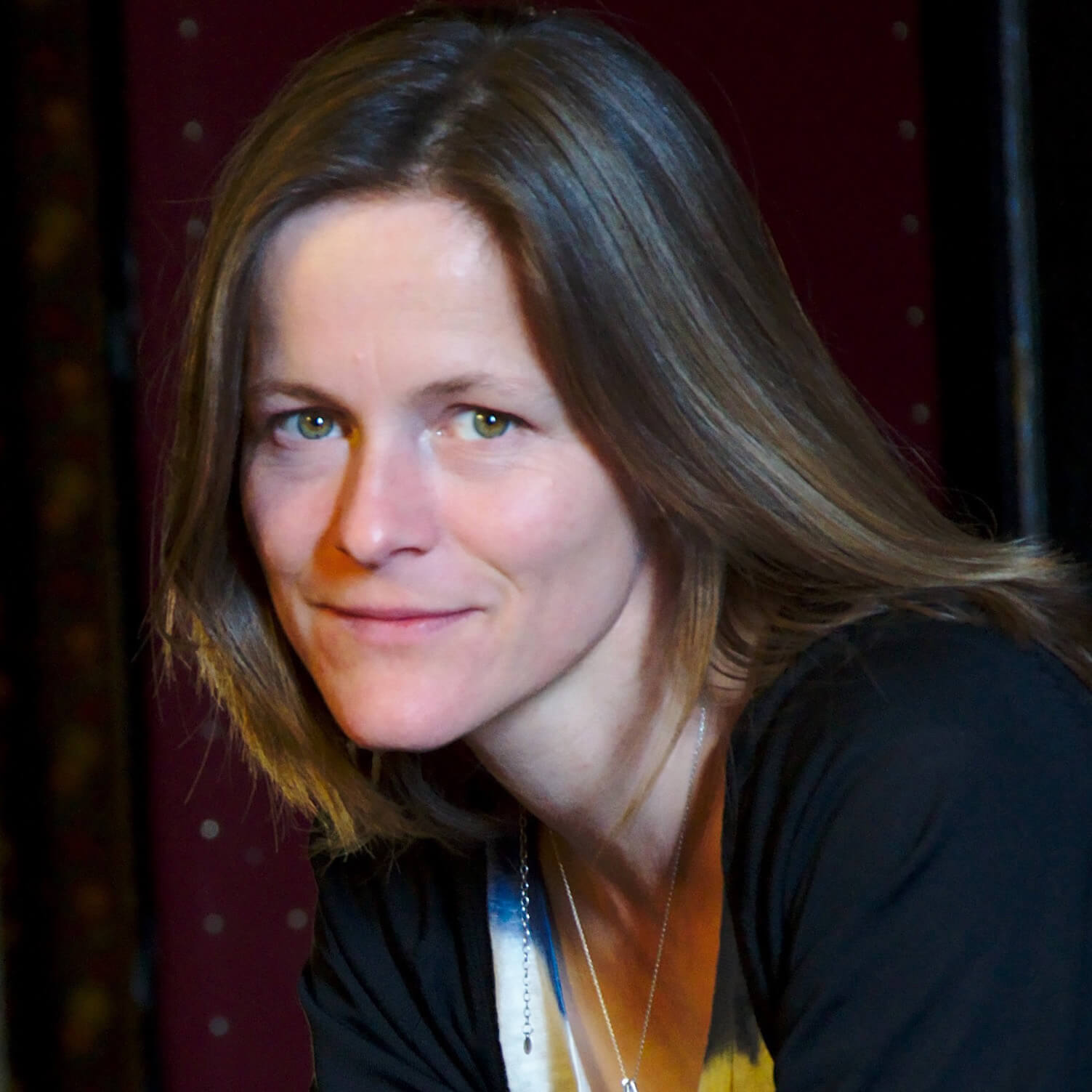
Camilla Wilson
- Senior Lecturer, Fine Art
- Email: c.wilson@bathspa.ac.uk
- School: Bath School of Art, Film and Media
- Campus: Sion Hill
- Website:
Personal statement
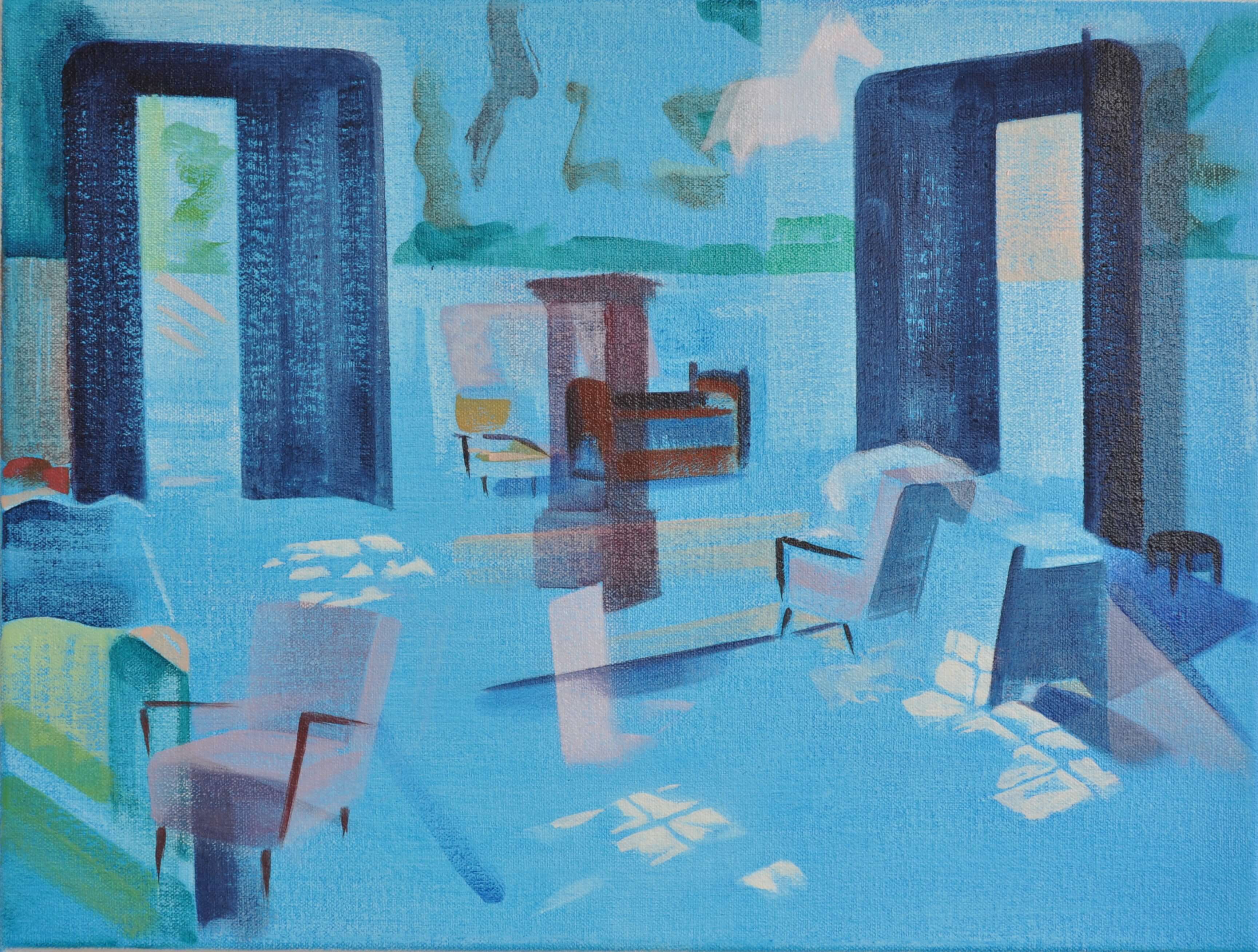
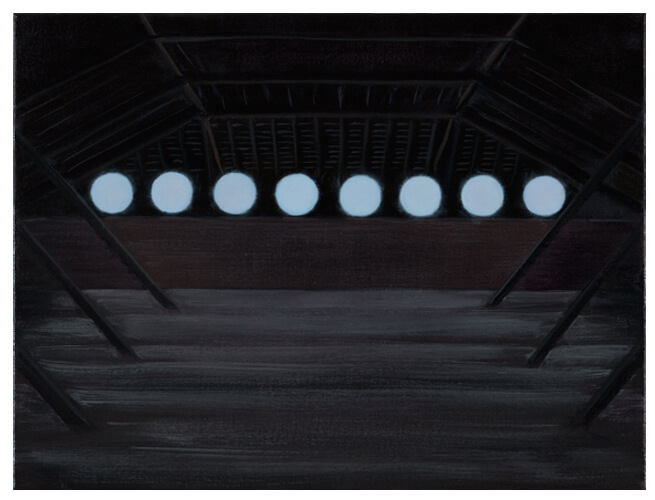
Camilla Wilson’s painting finds its focus in the space of the interior. She has configured the interior as a stage-like setting, the place of potential action, historical narrative, occupied by passed or multiple moments, and augmented, fractured, in reflection.
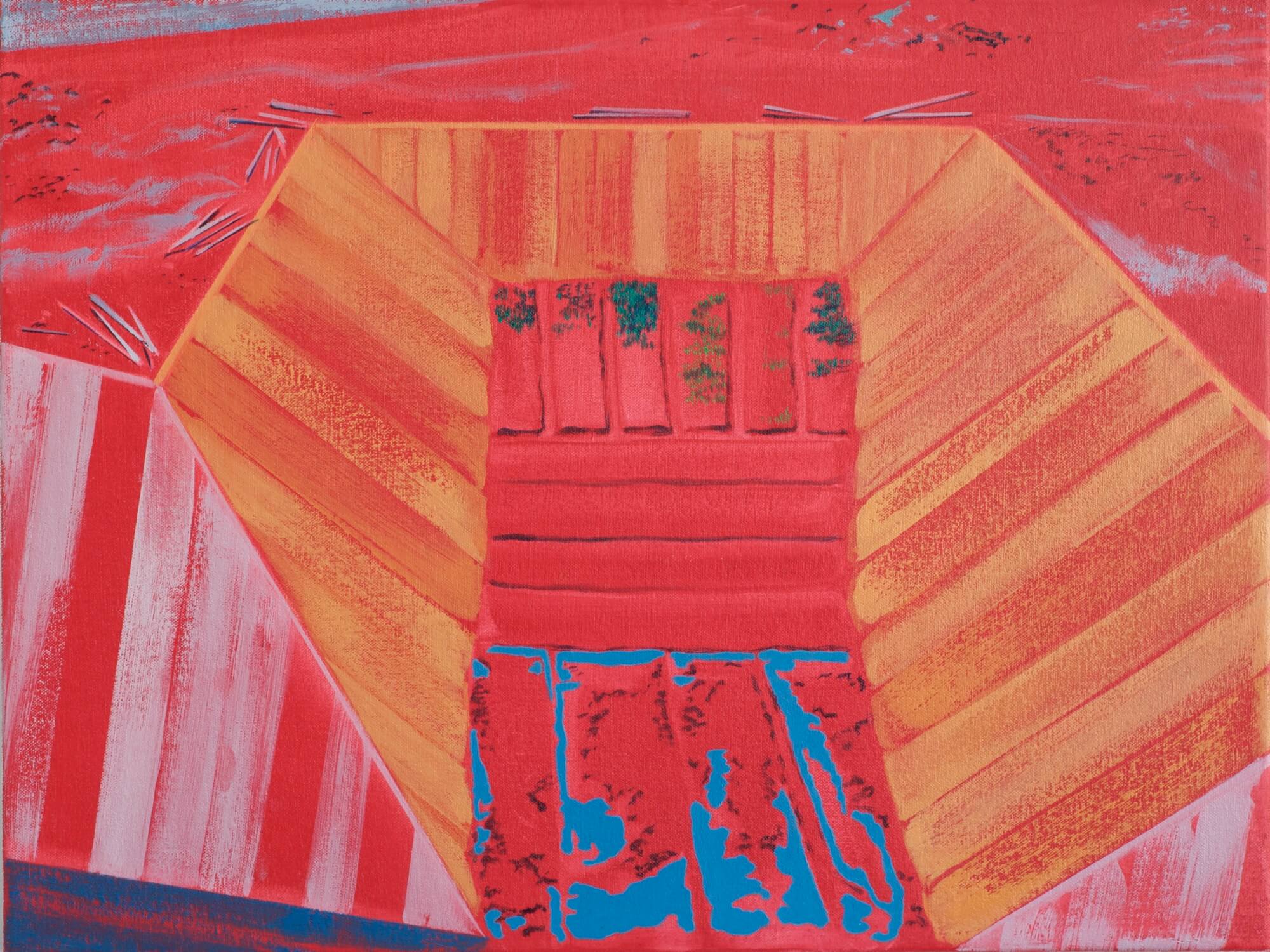
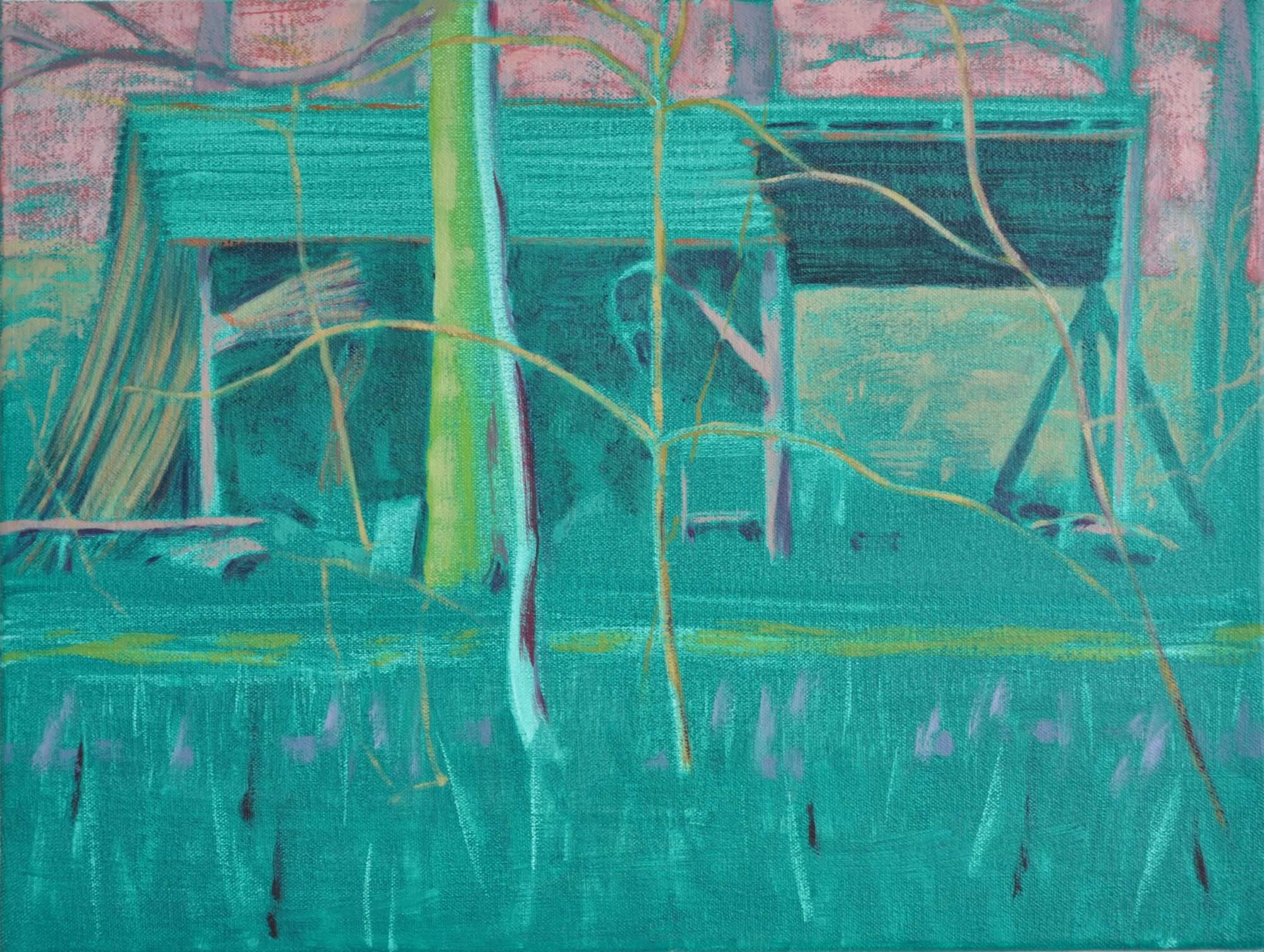
Recent painting embodies both the desire for an interior space and the negotiation of a representational language appropriate to this. These are forms of ruin, places in transition between one state and the next, open to an ambiguity of reading and spatial experience. The paintings figure no human presence, but yet invoke its traces. The emphasis is upon the sense of inhabiting; inhabiting the space, and the image as a space.
"The 'Uncanny' is not a property of space itself, nor can it be provoked by any particular spatial conformation; it is, in its aesthetic dimension a representation of a mental state of projection that precisely elides the boundaries of real and unreal in order to provoke a disturbing ambiguity, a slippage between waking and dreaming’.1
The sense that these interiors are not self-evident arises from the feeling that we might be looking at stage sets rather than actual interiors. Sometimes, the paintings work to delay recognition on the part of a viewer; there is an uncertainty as to their reality. Heightened colour emphasises a sense of spatial dislocation. Sometimes, the places appear obsolete, unbound by function, defamiliarised, and so are free to take on new, chimerical qualities.
These paintings are in a sense fragments. Just as ruins do, they refer to a lost whole. The painted language here seeks to elaborate the incomplete as complete. As Peter Osborne refers to the fragment, "The independence of each individual fragment from others figures the idea of totality, from which the ensemble or collection of fragments derives both its necessity - as an externally imposed or constructed unity of a multiplicity, the unity of a montage - and its own sense of incompletion".2
Like a dream space, eliding boundaries of real and unreal, the work suggests that inhabiting an interior is more a psychological than a physiological state. Experience is collapsed into a moment, a moment is lived by an image, and the image extended through painting.
Camilla has been a Jerwood Contemporary Painters finalist and has shown her work solo in London at Fordham, Laurent Delaye, as well as in group shows at the Herbert Read gallery, Metropole Galleries, ArtSway, Salford, Dunkirk and Cardiff amongst others; and outside the UK in Cologne, Vienna, Maribor and Berlin. She has also curated exhibitions, amongst which were "Of and For" at the Bank, and "Mirei" in Unit 2, Whitechapel, with the artist Mary Maclean. Aside from lecuring at Bath School of Art and Design, Camilla has taught at Sir John Cass Faculty of Art, Design and Architecture, Goldsmiths College, Kent Institute of Art and Design, and Holbaek Kunsthøjskolen in Denmark.
1 Anthony Vidler, The Architectural Uncanny, MIT Press 1992, p11
2 Peter Osborne , Anywhere or Not At All, Verso 2013, p60
Academic qualifications
- MFA Fine Art, Slade School of Fine Art, University College London, 1999
- BA Fine Art (first class honours), Slade School of Fine Art, University College London, 1997
- BA French/Italian (first class honours) QMW, London University, 1990.
Professional memberships
- Fellowship of the Higher Education Academy (FHEA).
Bath Spa University employment
- 2008-present.
Other external roles
- Lecturer at The Cass, London Metropolitan University.
Area of expertise
- Painting.
Other research outputs
Reviews/exhibition catalogue entries:
- Jerwood Contemporary Painters (catalogue), 2007
- Zoo Art Fair (catalogue), 2005
- Mark Gisbourne, "The Contemporaries’ Contemporaries", Contemporary Visual Art, Issue 17.
Awards:
- 2003 Studio residency, Museum Insel Hombroich, Neuss, Germany
- 2000 Awarded an ACAVA studio for one year.
Collections:
- Paintings in private collections in London, New York and Tokyo.
Paintings (top to bottom)
- "Rabbits"
- "Floodplain"
- "Wands"
- "Deck of Moons".
Research and academic outputs
About the heads (2019) [REF2021 collection]
artefact
Wilson, C (2021) About the heads (2019) [REF2021 collection].
Enfouie (2019)
exhibition
Wilson, C (2023) Enfouie (2019). In: The ING Discerning Eye Exhibition, Mall Galleries, London, UK, 12 - 26 November 2023.
Drive in (2022) & Mirage (2018) & Thresholds (2016)
exhibition
Wilson, C (2022) Drive in (2022) & Mirage (2018) & Thresholds (2016). In: Saint Nicholas, Meakin + Parsons x Hannah Payne, Oxford, UK, 3 - 20 December 2022.
About the Heads [curators]
exhibition
Waterworth, D and Wilson, C (2019) About the Heads [curators]. Old Royal Naval College, University of Greenwich, London, UK, 18 April - 24 May 2019.
Wands & Rabbits
exhibition
Wilson, C (2016) Wands & Rabbits. In: Beep 2016: This must be the place I never wanted to leave, Swansea College of Art, Swansea, Wales (then touring), 6 August - 3 September 2016.
Wallpaper fragment & Inscription in arsenic green (after David) & Les Invalides
exhibition
Wilson, C (2016) Wallpaper fragment & Inscription in arsenic green (after David) & Les Invalides. In: Poison - An Anti-Visual Strategy (Rock Room Project), UCL Rock Room, UCL, London, 11 -13 May 2016.
Of and For [co-curator]
exhibition
Wilson, C (2014) Of and For [co-curator]. The Bank, Cass, London, UK, 15 January - 7 February 2014.
Creekside Open selected by Dexter Dalwood [group exhibition]
exhibition
Wilson, C (2011) Creekside Open selected by Dexter Dalwood [group exhibition]. A.P.T. Gallery, London, UK, 12 – 29 May 2011.
Super Natural [group exhibition]
exhibition
Wilson, C (2010) Super Natural [group exhibition]. Charlie Dutton Gallery, London, UK, 3 - 20 November 2010.
Interior Life [group exhibition]
exhibition
Wilson, C (2010) Interior Life [group exhibition]. Herbert Read Gallery, Canterbury, UK, 2 - 27 November 2010.
Mirei
exhibition
Wilson, C and Maclean, M (2008) Mirei. Unit 2 Gallery, London, UK, December 2009 - January 2010.
Artsway Open [group exhibition]
exhibition
Wilson, C (2007) Artsway Open [group exhibition]. ArtSway, Sway, UK, December 2007 - February 2008.
B.S.T. [group exhibition]
exhibition
Wilson, C (2007) B.S.T. [group exhibition]. Seven Seven Contemporary Art, London, UK, 2 - 26 August 2007.
The lagoon
exhibition
Wilson, C (2007) The lagoon. In: Jerwood Contemporary Painters, Jerwood Space, London, UK, 15 February - 13 March 2007.
No-Ship [group exhibition]
exhibition
Wilson, C (2006) No-Ship [group exhibition]. Seven Seven Contemporary Art, London, UK, 21 September – 8 October 2006.
Continental Breakfast Maribor [group exhibition]
exhibition
Wilson, C (2005) Continental Breakfast Maribor [group exhibition]. UGM Maribor, Slovenia, 1 - 18 December 2005.
Red October [group exhibition]
exhibition
Wilson, C (2005) Red October [group exhibition]. Seven Seven Contemporary Art, London, UK, October 2005.
Les Merveilles du Monde [group exhibition]
exhibition
Wilson, C (2005) Les Merveilles du Monde [group exhibition]. Musee des Beaux Arts Dunkerque, France, 26 June - 16 October 2005.
Trunk Show [group exhibition]
exhibition
Wilson, C (2005) Trunk Show [group exhibition]. The Womens’ Library, London, UK, June 2005.
Oh Vienna [group exhibition]
exhibition
Wilson, C (2003) Oh Vienna [group exhibition]. Seven Seven Contemporary Art, London, UK, May - June 2003.
The Greatest Show on Earth [group exhibition]
exhibition
Wilson, C (2003) The Greatest Show on Earth [group exhibition]. Metropole Galleries, Folkestone, UK, 18 January - 2 March 2003.
Artroom [group exhibition]
exhibition
Wilson, C (2002) Artroom [group exhibition]. Cologne, Germany, September 2002.
Five New Artists [group exhibition]
exhibition
Wilson, C (2002) Five New Artists [group exhibition]. Purdy Hicks, London, UK, 22 March - 20 April 2002.
Pedigog [group exhibition]
exhibition
Wilson, C (2001) Pedigog [group exhibition]. Unit 2 Gallery, London, UK, November 2001.
Cultural Advancement [group exhibition]
exhibition
Wilson, C (2001) Cultural Advancement [group exhibition]. Century Gallery (ACAVA), London, UK, June 2001.
Artfutures [group exhibition]
exhibition
Wilson, C (2000) Artfutures [group exhibition]. Contemporary Art Society, Barbican Centre, London, UK, November 2000.
Conversation Piece [group exhibition]
exhibition
Wilson, C (2000) Conversation Piece [group exhibition]. Unit 2 Gallery, London, UK, October 2000.
Artfutures [group exhibition]
exhibition
Wilson, C (1999) Artfutures [group exhibition]. Contemporary Art Society, Barbican Centre, London, UK, November 1999.
Inside [group exhibition]
exhibition
Wilson, C (1998) Inside [group exhibition]. London EC2, London, UK, May 1998.
Artfutures [group exhibition]
exhibition
Wilson, C (1998) Artfutures [group exhibition]. Contemporary Art Society, Barbican Centre, London, UK, January 1998.
Eraser
exhibition
Wilson, C (1997) Eraser. Laurent Delaye Gallery, London, UK, October - November 1997.
Site 11: collaborative project
exhibition
Wilson, C (1996) Site 11: collaborative project. In: In Our Empty Rooms, Berlin, Germany, April 1996.
Trojan Horses: collaborative project
exhibition
Wilson, C (1996) Trojan Horses: collaborative project. Slade Gallery, University College London, UK, March 1996.
Microgallery
exhibition
Wilson, C (1995) Microgallery. Slade Gallery, University College London, UK, November 1995.
Little and Large [group exhibition]
exhibition
Wilson, C (1994) Little and Large [group exhibition]. The Tannery, London, UK, November 1994.
Disclosure [group exhibition]
exhibition
Wilson, C (1994) Disclosure [group exhibition]. London EC2, London, UK, June 1994.