
Level 3
Many people with Level 3 qualifications either become Teaching Assistants or continue their studies at degree-level. However, there are plenty of other options you might pursue.
What roles can I apply for?
There are a vast range of roles available that require Level 3 qualifications. Some may require you to hold a particular qualification, such as as a Certificate in Supporting Teaching and Learning in Schools.
You may be able to secure a role as a Teaching Assistant – particularly if you've got a relevant qualification or some experience working in a school environment. Many Teaching Assistants work part-time, and later progress to become a Higher Level Teaching Assistant (HLTA) or qualified teacher. GOV.UK provides a useful summary of the average salary, working hours and career progression for a Teaching Assistant.
Alternatively, you may consider working in Further Education (FE), teaching people aged 16 and over. You'll need a significant amount of relevant work experience in your chosen industry (typically five years or more) and a genuine passion for inspiring the next generation.
There are a huge variety of subjects you can teach, and many roles allow you to tailor your working hours to your existing commitments. GOV.UK offers plenty of advice on how to become a Further Education teacher, as well as how to find a job in FE.
There are also plenty of non-teaching roles that involve working in an educational setting. Consider pursuing pastoral support positions, or volunteering to gain experience of working with children or young people.
You could become a...
- Teaching Assistant (TA)
- Further Education (FE) Tutor*
- Learning and Skills Assessor
- Education Technician
- Early Years Educator
- Learning Support Assistant
- Pastoral Support Officer
- Safeguarding Officer
- Vocational Mentor
- Mid-day Supervising Assistant
- School Caretaker
- Administrator
*Requires relevant industry experience.

Should I progress to Level 4?
Your Level 3 qualifications are the gateway to Higher Education (HE) – that's Level 4 and above. Level 4 qualifications are usually taught at universities or specialist colleges, and for many people it marks the beginning of degree-level study.
Can I progress without going to university?
Yes. If you'd rather take a vocational approach, you might be interested in becoming a Higher Level Teaching Assistant or teaching in Further Education. You could also complete a Teacher Degree Apprenticeship which leads to Qualified Teacher Status.

Become a Higher Level Teaching Assistant
If you're currently working as a Teaching Assistant, you may wish to take the next step and qualify as a Higher Level Teaching Assistant (HLTA). This enables you to take on greater responsibility in the classroom, have more involvement in lesson planning and earn a higher salary.
A range of providers offer the Level 4 Certificate for Higher Level Teaching Assistants course, and many of them have fully remote or flexible study options.

Study for a Diploma in Teaching FE and Skills
If you’re looking to teach in colleges or adult learning centres, the Level 5 Diploma in Teaching (Further Education and Skills) might be for you. This nationally recognised qualification prepares you to teach post-14 learners in a variety of settings.
Ideal for those just starting out or already working in FE, this course leads to Qualified Teacher Learning and Skills (QTLS) status, which is recognised as equivalent to Qualified Teacher Status (QTS) in schools.
Qualify as a teacher in just three years
By studying a Bachelor's degree with QTS, you can progress to Level 6 and gain Qualified Teacher Status (QTS) in just three years. This is the cheapest and fastest route to become a qualified teacher.
You may see 'Bachelor of Education' degrees abbreviated to 'BEd'.
Primary education
BA (Hons) Primary Education with QTS degrees are offered at universities across the UK. Some courses require you to specialise in teaching pupils aged 3-7 or 5-11 years old, so it's important to consider the age range you'd like to teach.
If you're not sure, you could choose a course with a wider age range, or gain experience of working with different age groups by volunteering at a local charity, community group or school.
Secondary education
Secondary school teachers are expected to have good knowledge of the subject they teach. For this reason, Secondary Education degrees usually specialise in one subject (such as English or Mathematics) but some courses are broader than others.
An alternative route is to study your chosen subject at degree level and complete your teacher training afterwards. Once you've got a degree, there are numerous ways to gain QTS.
For example, you might study BSc (Hons) Physics, followed by a Postgraduate Certificate in Education (PGCE). If you study full-time, this would take four years in total.
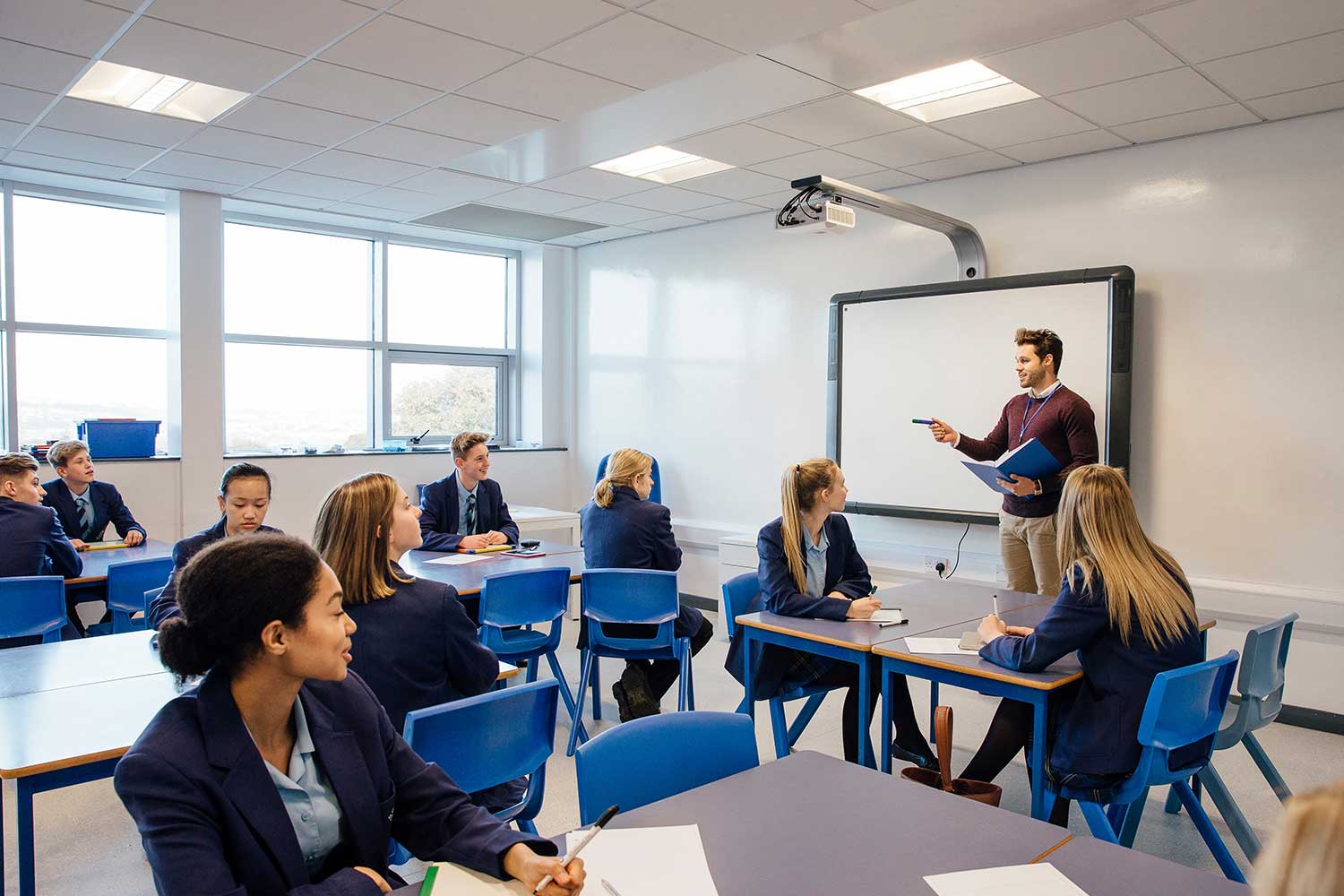
Teacher Degree Apprenticeships
While a Bachelor’s degree is typically required to achieve Qualified Teacher Status (QTS) for teaching in primary and secondary schools in the UK, it's possible to achieve both without attending university in the traditional sense.
A Teacher Degree Apprenticeship (TDA) is a four-year, full-time course.
It has no tuition fees, and it allows you to work in a school while earning a salary, studying for a degree and gaining QTS. Trainee teachers spend an average of just two days per week studying for their degree, making it a great option for those seeking a practical, hands-on approach to teacher training.
You can check your eligibility and search for providers via GOV.UK.
Sources of support
Teacher training advisers

If you choose to study for a Bachelor's Degree, you can apply for a free teacher training adviser through Get Into Teaching. They can provide 1:1 support by phone, text or email, and you can talk to them as little or as much as you need.
Student Finance

You may be eligible for a student loan, also known as Student Finance. This can help to cover your tuition fees and living costs while you're studying at university. Your eligibility depends on many different factors, including your nationality or residency status.
Advanced Learner Loan

You could be eligible for an Advanced Learner Loan if you're studying at a college or training provider in England. Check your eligibility online and read the criteria about your residency status carefully.
Wraparound Childcare

If you have children aged between 4-11 years old, you may be able to receive funding through the MOD's Wraparound Childcare (WAC) scheme. Eligible families may claim funding for up to 20 hours per week of wraparound childcare (for each child) during term time. Check your eligibility and browse FAQs on the Army Families Federation (AFF) website.
Teacher training advisers
If you choose to study for a Bachelor's Degree, you can apply for a free teacher training adviser through Get Into Teaching. They can provide 1:1 support by phone, text or email, and you can talk to them as little or as much as you need.
Student Finance
You may be eligible for a student loan, also known as Student Finance. This can help to cover your tuition fees and living costs while you're studying at university. Your eligibility depends on many different factors, including your nationality or residency status.
Advanced Learner Loan
You could be eligible for an Advanced Learner Loan if you're studying at a college or training provider in England. Check your eligibility online and read the criteria about your residency status carefully.
Wraparound Childcare
If you have children aged between 4-11 years old, you may be able to receive funding through the MOD's Wraparound Childcare (WAC) scheme. Eligible families may claim funding for up to 20 hours per week of wraparound childcare (for each child) during term time. Check your eligibility and browse FAQs on the Army Families Federation (AFF) website.

Getting your GCSEs in English and Maths
To begin your journey into teaching, you’ll usually need GCSEs in English and Maths at grade 4 (C) or above. To teach in a primary school, you'll also need a GCSE in Science.
If you don’t have these qualifications, you're not alone – many adults resit their GCSEs later in life. You can study for your GCSEs through a range of providers, including local learning centres. Many courses are available either online or in person, so you can learn in a way that works for you.
The National Careers Service allows you to search for your nearest providers. Use the filters to look for daytime, evening or weekend courses, or ones with flexible or part-time hours. Many of these courses are completely free.
GOV.UK provides a full list of qualifications equivalent to GCSEs, including Functional Skills qualifications that can be obtained through an apprenticeship.
Preparing to enter the workplace
Registering with Forces Employment gives you free access to career consultations, mentoring and tailored guidance including help with CVs, interview coaching, job matching and more.
The Armed Forces Covenant provides Service families with support and guidance on a range of topics including childcare, education and finances. The Covenant can also connect you with employers who understand the lifestyle of Service families.
Getting work experience
Tutoring, volunteering in schools or getting involved with local education projects can help you refresh your skills, gain references and ease into a new environment. Websites like Indeed are helpful for finding both paid and voluntary opportunities in your area.
You can stay up to date on the latest industry insights by following educational blogs, or networking at Get Into Teaching events. This can help to build your confidence before entering a new, unfamiliar industry.
Returning to work
If you're returning to the workplace after an extended break, take a look at the government’s Returner Toolkit which is packed with practical tips and step-by-step advice to help you navigate your return to the workplace.
You may find it helpful to take on a voluntary role first. This can be brilliant way to find your feet, boost your self-esteem and create a stepping stone to employment.