Psychology labs
An interactive environment where you can apply theory to practice. Gain hands-on experience with specialist equipment and research tools, developing the practical skills needed for psychological investigation and discovery.
Our labs
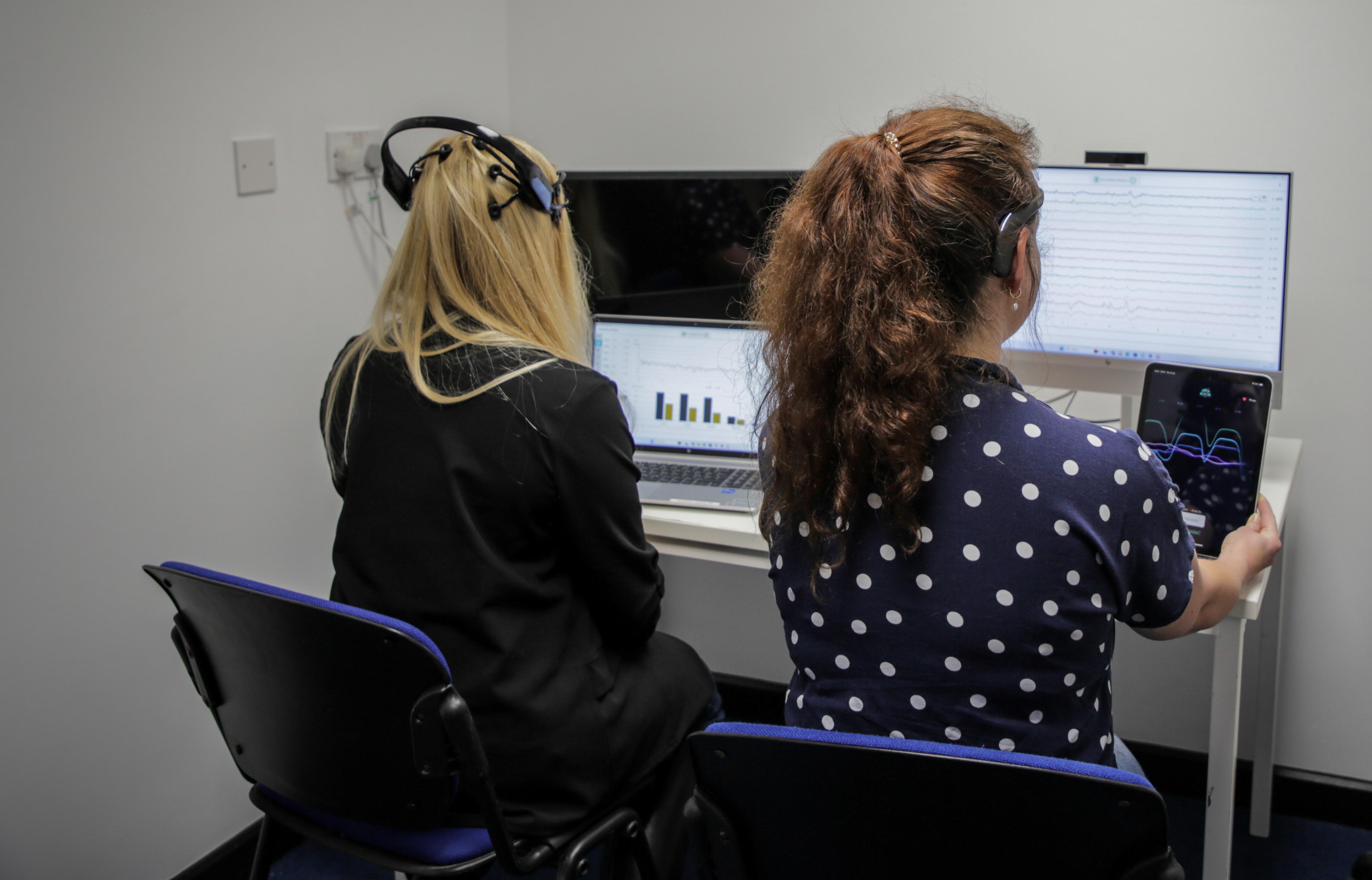
Our newly renovated psychology laboratories are spaces for the controlled study of the human brain and behaviour. They support a wide range of areas, including biological, cognitive, behavioural, developmental, forensic and social psychology.
Methods and uses
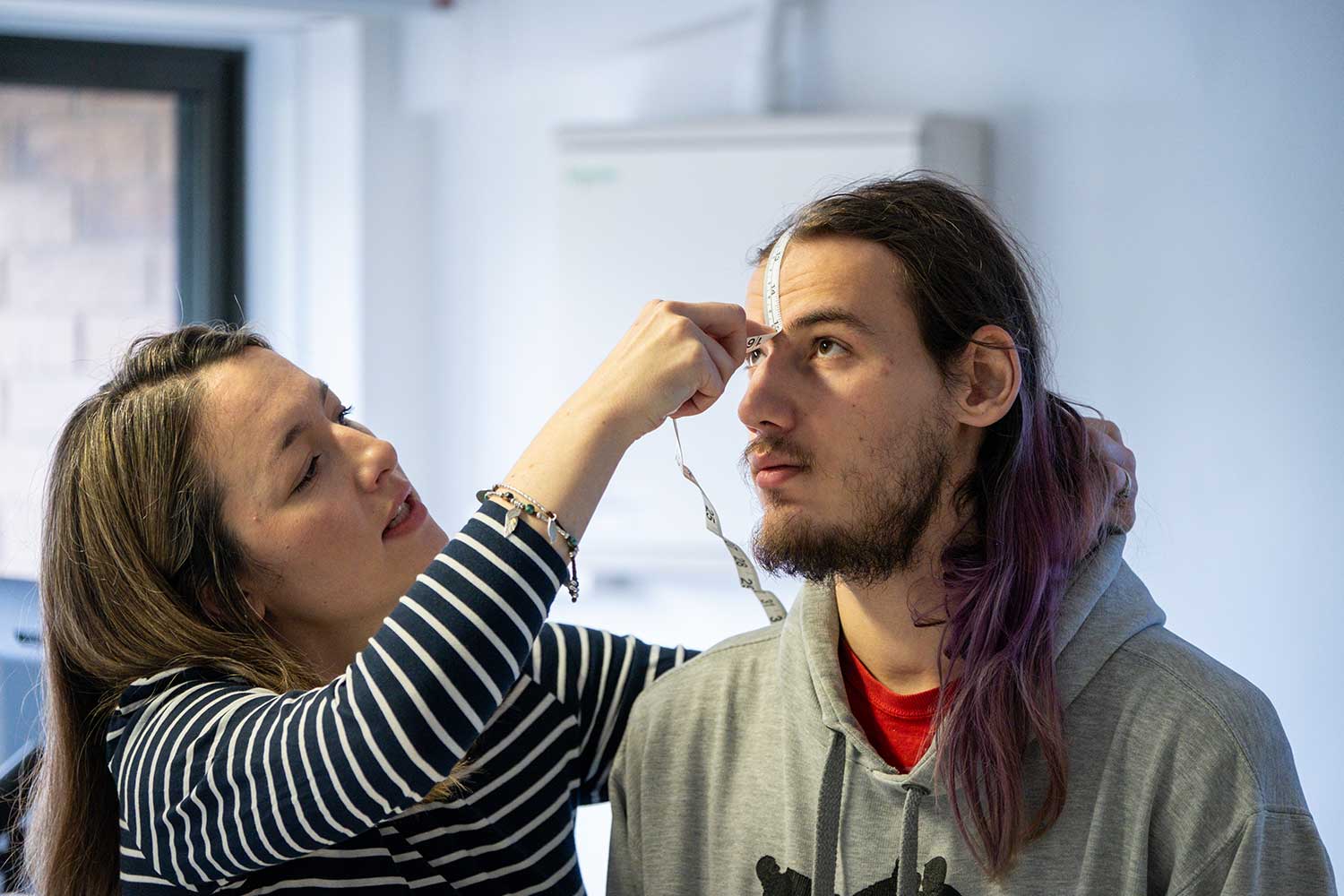
A variety of research methods are employed in our labs, from in-person and computer-based experiments to observations and interviews. Our facilities are used for dissertation research, teaching demonstrations, and independent or group study projects. Studying Psychology at BSU gives you the opportunity to build practical skills and apply specialist techniques that prepare you for a wide range of careers.
Neuro Lab
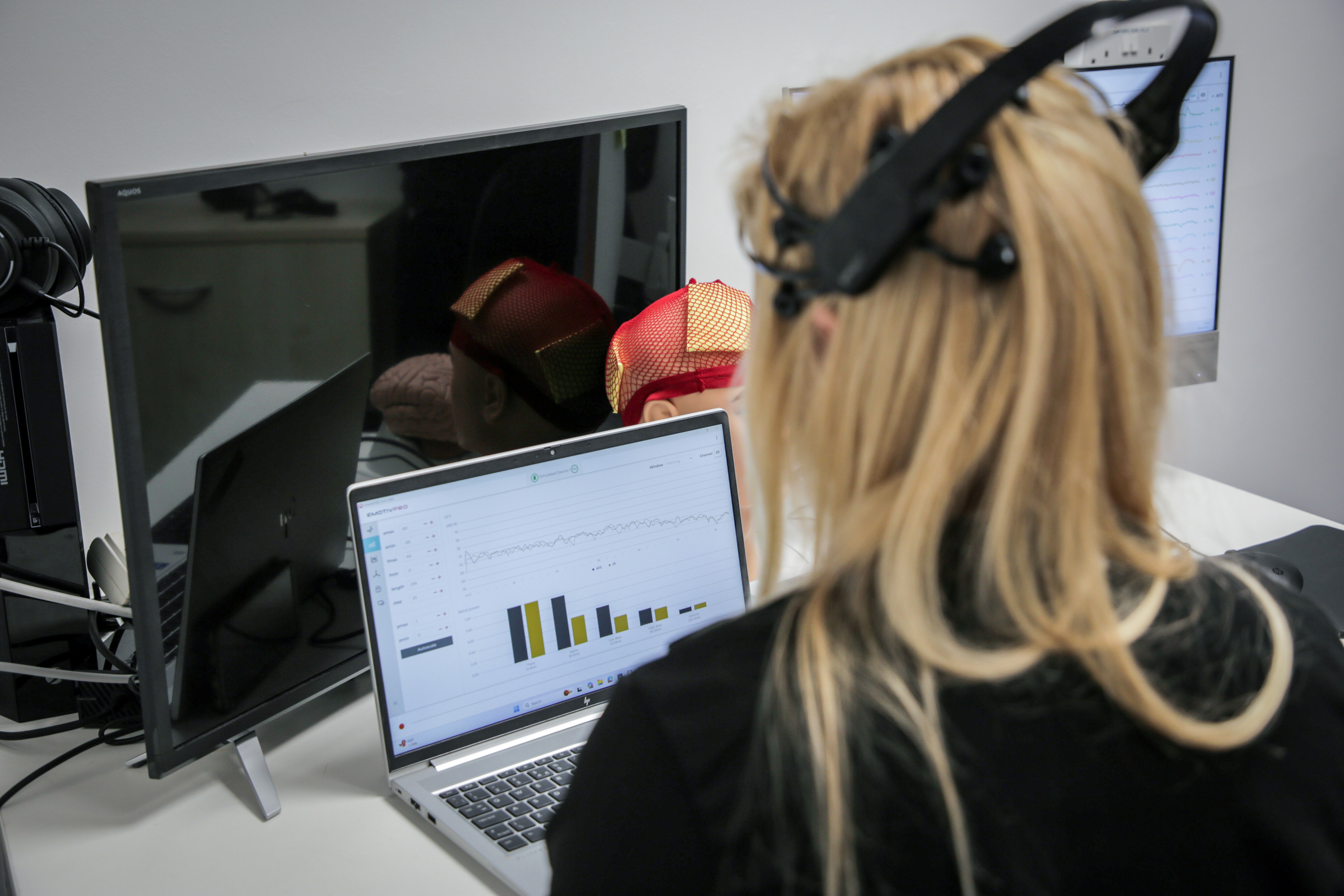
Located in SN.G04, the Neuro Lab is equipped for exploring the biological and neurological aspects of psychology. Students use this space to investigate brain activity, cognitive processes and physiological responses.
The lab includes:
- Brainbox Nurostym tES for transcranial electrical stimulation
- EPOC X EEG headset
- Scent delivery system (olfactometer)
- Biopac MP36 for physiological measurements.
Eye Tracking Lab
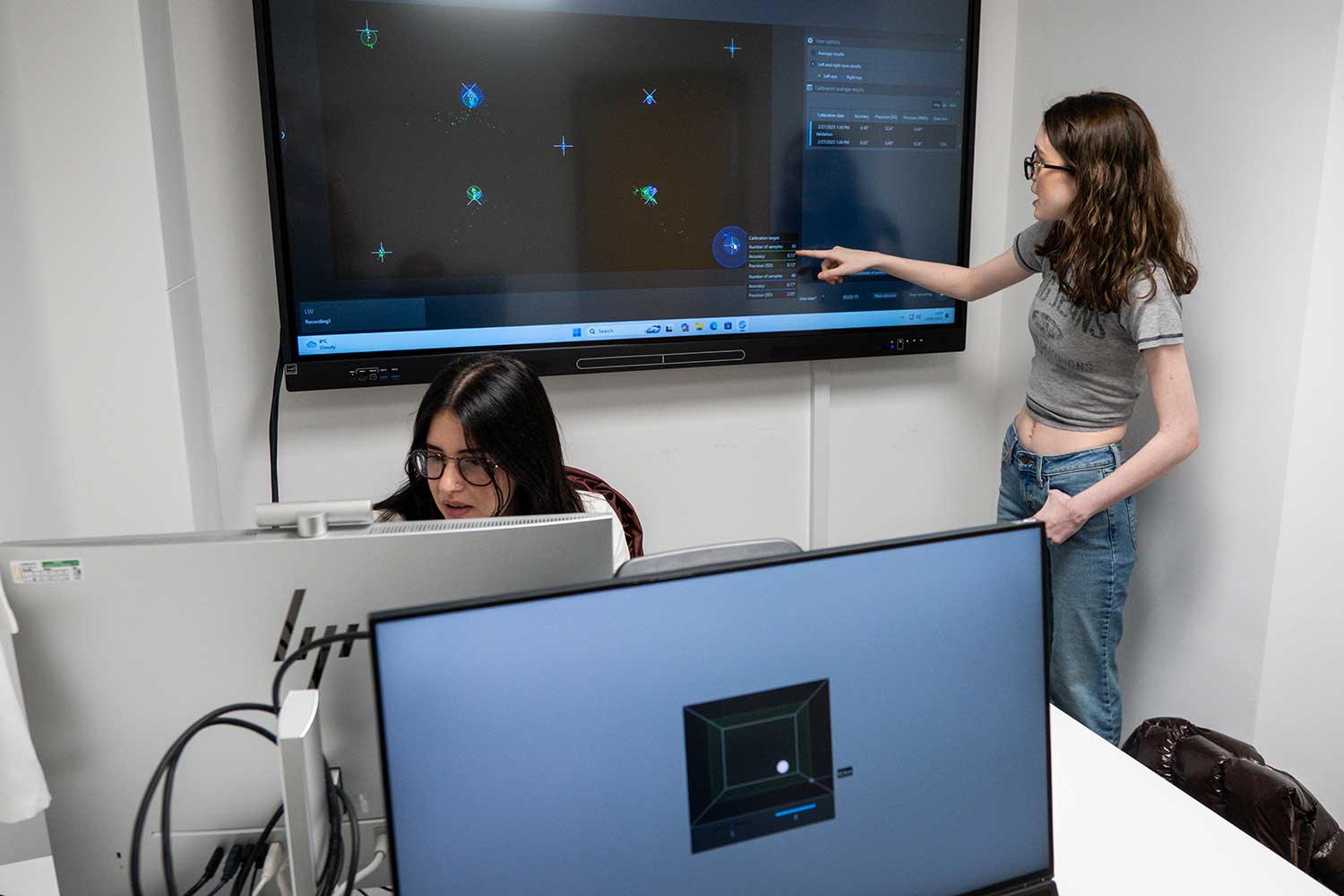
Located in SN.G13, the Eye Tracking Lab provides specialist equipment to study visual attention, reading and cognitive processing.
The lab features:
- Tobii Pro Spectrum
- Pupil Core Eye Tracker
- MK2 Eye Tracker Toolbox.
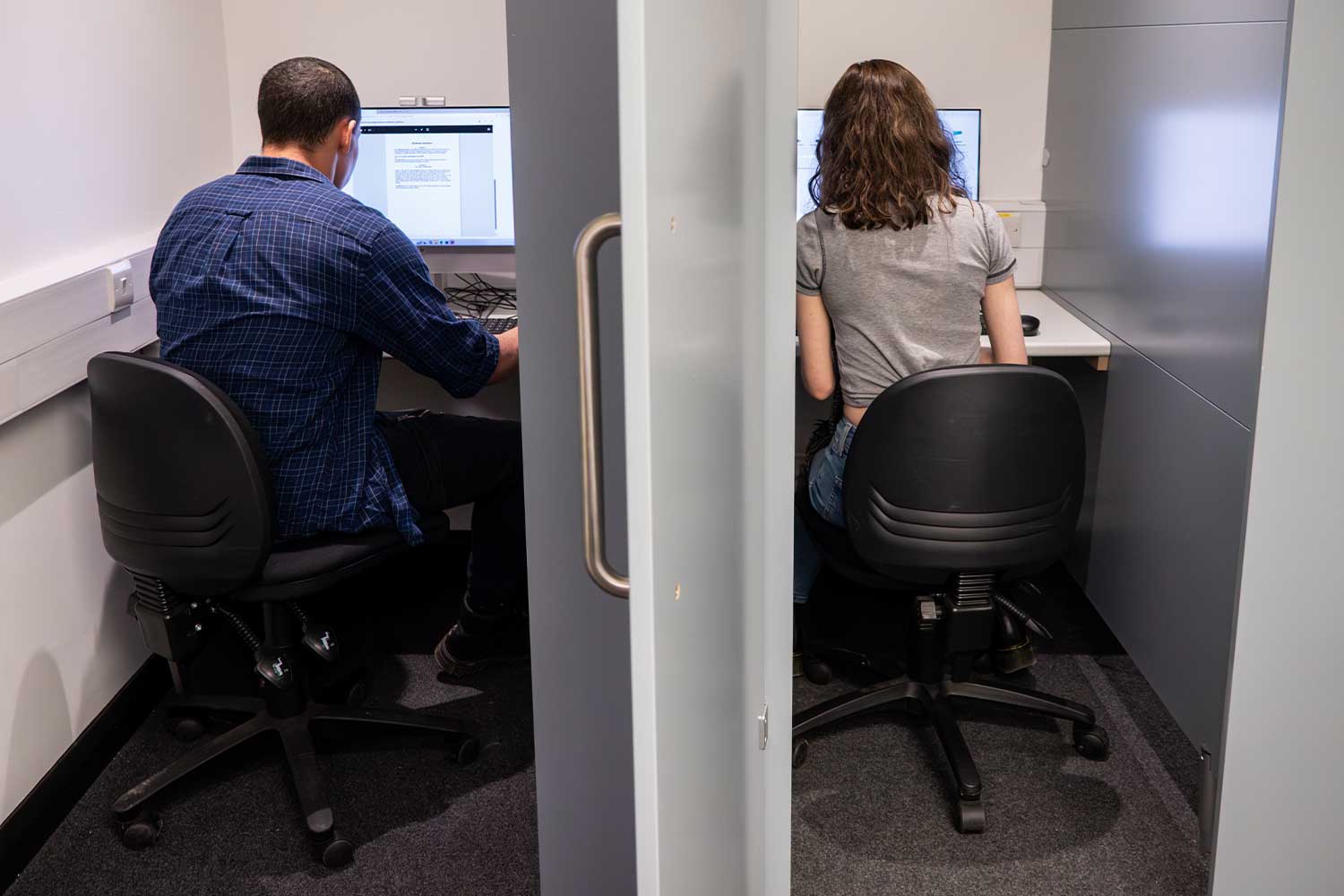
Experimental Lab
Located in SN.G19, the Experimental Lab supports a wide range of psychological research. Students can design and carry out computer-based experiments, behavioural studies, and data collection projects for coursework and dissertations.
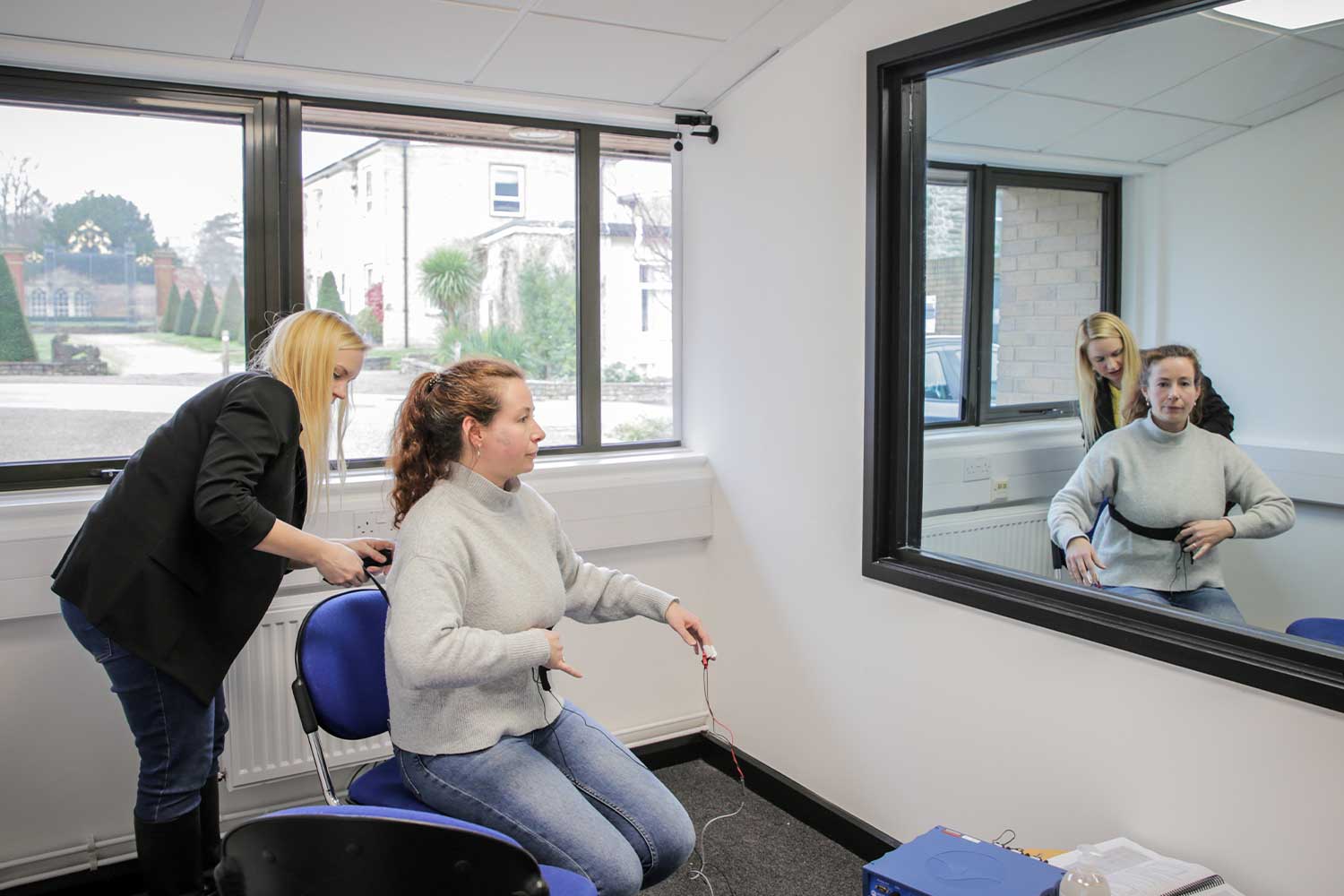
Interview Lab
Located in SN.G20, the Interview Lab is designed for qualitative research, providing a professional setting for interviews, focus groups, and observational studies as part of teaching, research, and student projects.
The space is divided into an interview room and an observation area, featuring a windowed mirror for unobtrusive observation.
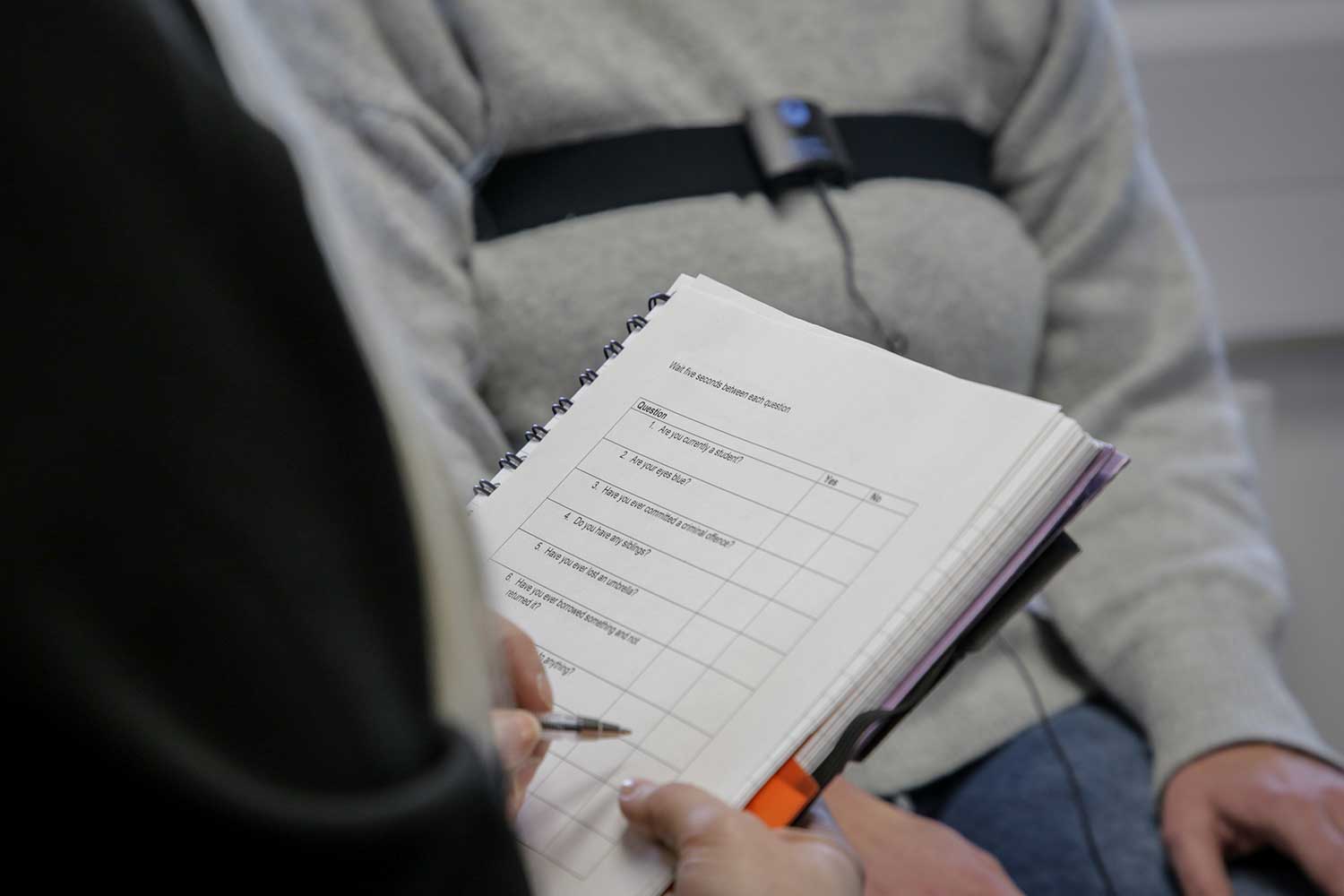
It is equipped with AV facilities, including video cameras and microphones, and houses Infinity transcription pedals. Specialized testing, such as polygraph assessments, can also be carried out in this lab.
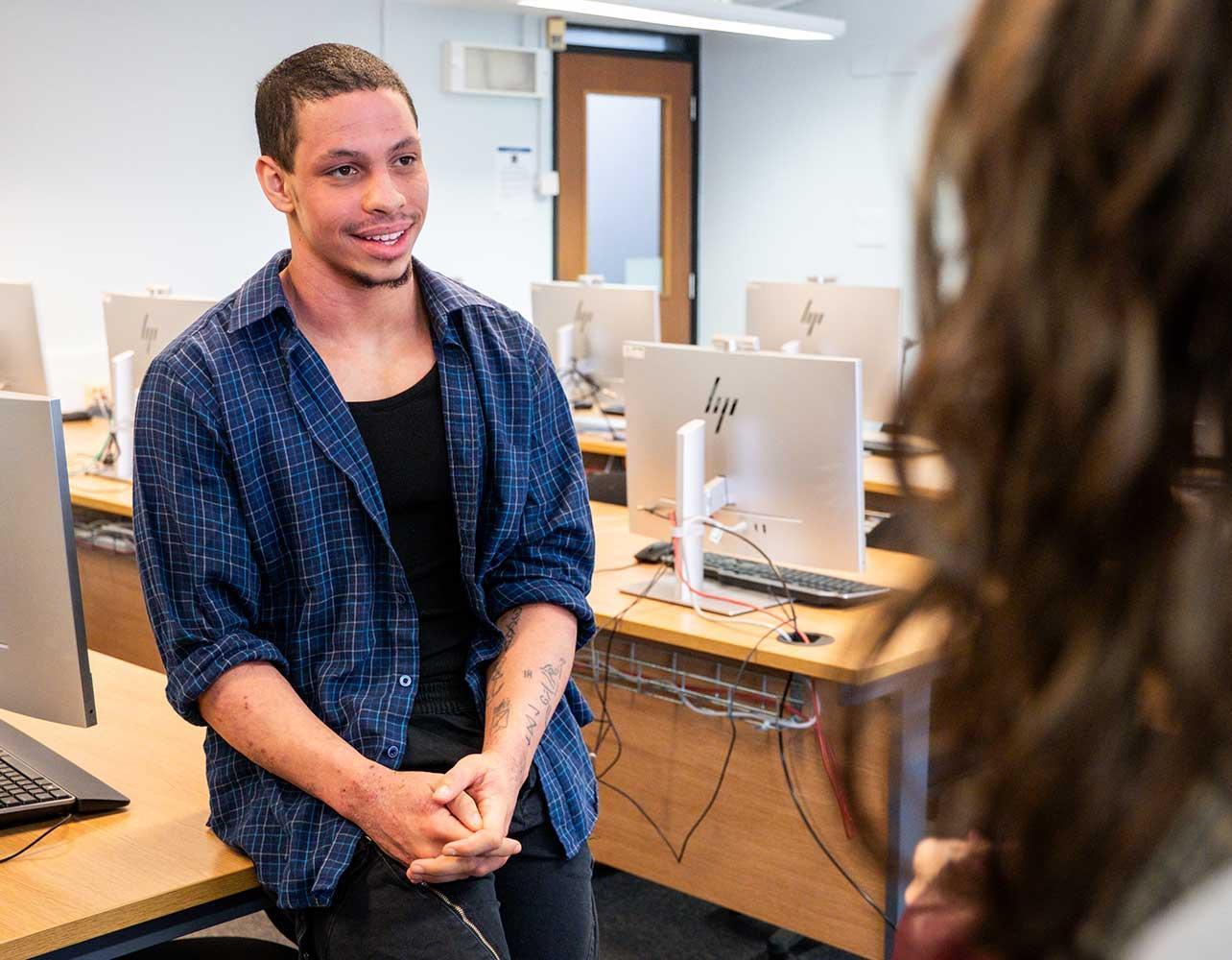
Computer Teaching Lab
SN.G14 houses a variety of digital tools to support psychology research and learning.
- Document creation and processing tools (like Microsoft Office and Adobe) allow the creation of documents for a variety of assignments.
- User-friendly statistics and analysis tools (like JASP and NVivo) enable easy analysis of psychology research, from quantitative datasheets to qualitative interview data.
- Experiment and questionnaire building tools (like Qualtrics, PsychoPy, Pavlovia and Jisc) can be used to conduct high-quality research digitally and online. Advanced statistics tools (like R and Python) can be explored to widen programming and analysis skills.
- Online learning resources (like Research Right) support classroom learning. Specialist tools (like Tobii Pro Lab, EmotivPRO and the Muse app) are essential for recording and analysing data from the associated equipment.
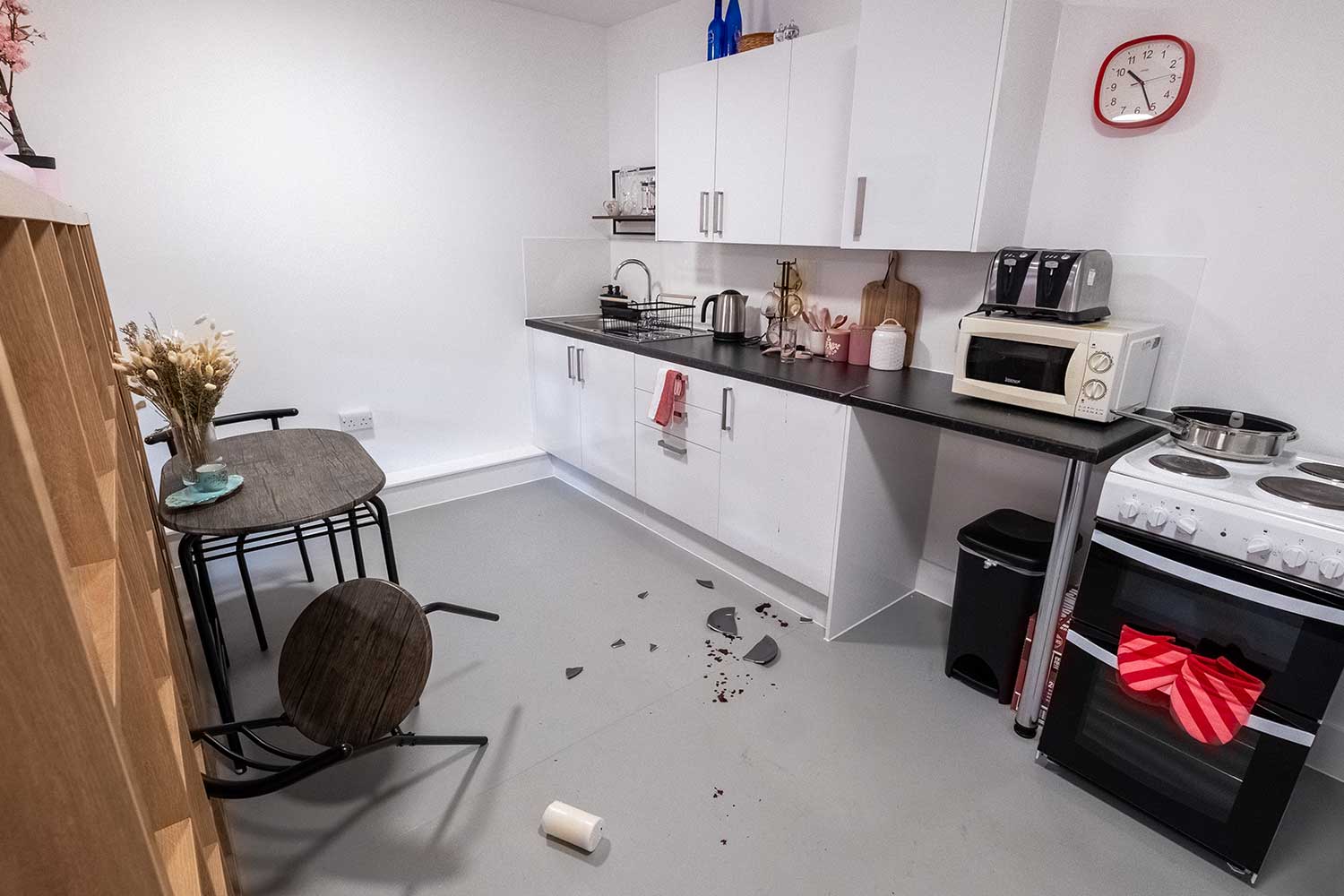
The Crime House
Located in LS.G06 (previously the Lambing Shed) the Crime House is a space is used for classroom teaching, student projects and events across the School of Sciences.
The facility is often utilised to demonstrate mock crime scenes where students can analyse evidence and generate theories about the scene.
Dissertation research
In their final year, students carry out an independent dissertation project on a psychology topic of their choice. Each student is supported by a member of our academic staff, who helps guide them through the process.
Students can arrange access to our specialist equipment and laboratory facilities to support their dissertation research. It’s a great opportunity to bring together the skills and knowledge developed over the course and apply them to an area of psychology they’re most interested in.
While other students and staff can make use of the facilities, priority is given to final year dissertation students.