The Wild Muse
News
British Science Week: BSU’s Wildlife Conservation course invites students to explore professional creativity in nature
Friday, 13 March, 2026British Science Week (6-15 March) is upon us, and at Bath Spa University there are many ways to experience and explore the sciences and other STEM subjects, from Psychology, Forensic Science and Computer Science to Biology, Human Nutrition and Geography. BSU also places an emphasis on creativity, and this is in no short supply even within the sciences.
BSU’s BSc Wildlife Conservation course is one example of how science and art coincide. Dr Ralph Thompson, Senior Lecturer in Zoology and Programme Leader for BSc Wildlife Conservation developed the course with an aim to bring the artistic and the natural worlds together. Talking about the importance of creativity within the sciences, Ralph said:
“We value interdisciplinary thinking to solve complex multifaceted problems in an increasingly complex world. Scientific progress is reliant on innovation from new ways of solving problems and the ability to ask new questions, which requires creative minds.”
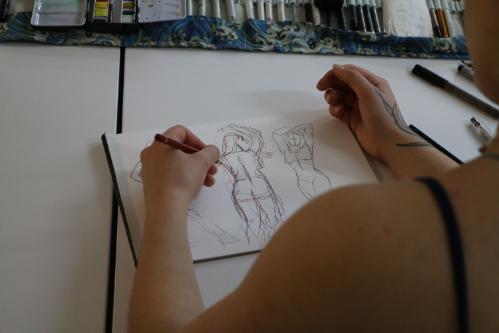
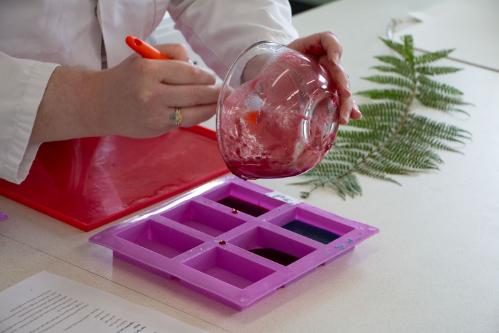
The Wild Muse: Creative Explorations of Nature module is unique to the Wildlife Conservation degree and was designed as a way of focusing on creative expression and communication of issues related to nature, wildlife and conservation. Students complete their own individual projects after experimenting with workshops in various disciplines such as life drawing, sewing, or creating and working with bioplastics, then come together at the end of the module to present their work at an exhibition.
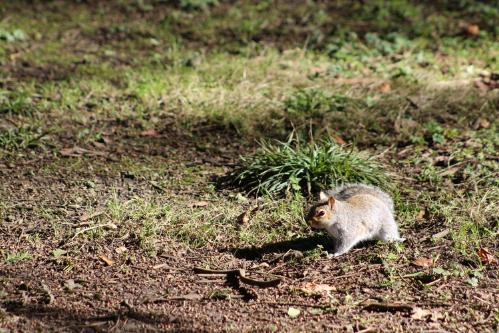
Third year students can also develop new ways to express their love of wildlife via a Wildlife Photography module. Ralph says these creative modules can help to engage the public, to showcase the skills and passions of the students, and can benefit their wellbeing by providing a mindful and positive way of interacting with the natural world. He continued:
“In Wildlife Conservation much of the challenge is in communicating conservation issues to people and getting them to value wildlife. Creativity is vital in this communication to come up with new ways to engage the public.”
Second year BSc Wildlife Conservation student Jemma Lawrence and third year Wildlife Conservation student Beth Fuller are just two of many who have enjoyed applying their own creativity to studying wildlife. Talking about the course, Jemma said:
“I have absolutely loved The Wild Muse so far. I am in my element, being able to express myself creatively and being given the freedom to do whatever piece of work we could want to do. With this degree, I am able to study my love for animals and conservation but also take on a creative approach with the range of different types of assessments and modules we get to do – something that combines both of my passions into one.”
Beth added:
“I always knew from a young age I wanted to work with animals. The course at BSU particularly excited me as it was advertised to not only be a science degree but to encourage creativity within learning. The wild muse module was exciting for me, as someone who has always been creative, it felt like fun rather than work. The wildlife photography module also interested me for the same reason.”
Jemma originally came from an art background, studying fine art and photography during her Foundation diploma, but her love of animals drew her towards the sciences and to BSU’s Wildlife Conservation course in particular. Explaining further, she said:
“My art has always been very nature-based, and I have always had a love for animals, finding myself constantly watching David Attenborough documentaries growing up. After coming to an open day at BSU, I was immediately drawn to the beauty of the surrounding area, but also by the University's drive to be a creative campus.”
Beth also has an artistic background and enjoys painting, and said she was attracted to BSU for its natural spaces – particularly the lake at Newton Park, which is home to various plant and animal life.
Studying science with an eye towards creativity can also help students to better understand how multifaceted science is and to break down stereotypes surrounding the study of science. Explaining how her views around science changed, Jemma said:
“Before studying science in more depth, I assumed that scientists mostly worked in laboratories doing controlled experiments, and that science had very clear right or wrong answers. However, I have realised that science is much more about asking questions, investigating real-world problems, and interpreting data. It involves observation, problem-solving, and sometimes unexpected results, which makes it far more dynamic and interesting than I originally thought.”
Before studying it at university, Beth had similar notions about science. She said:
“I think as a child, I always thought ‘science’ was a term used to describe experiments that ended in big eruptions and strong reactions. However, now I see science in all the small things around me, often stopping constantly in my day-to-day life to marvel over small elements of nature that I never would have noticed before.”
The creativity-driven selection of science courses at BSU also allows students to gain different perspectives on the world around them and create their own definitions of what it means to be a scientist. Expanding on this, Beth said:
“To me, being a scientist is about learning about how we can protect our planet and our people, through science-based solutions. It’s about learning from the world we live in and using that to care for it. Science to me is about educating other people, even in the non-science world, about things that I have learned that they may find interesting.”
Jemma had similar thoughts. She said:
“Being a scientist to me means being curious about the world and wanting to understand how nature works. I see science as a way to investigate the natural world and learn from what we observe rather than making assumptions. As someone interested in wildlife conservation and animal behaviour, being a scientist means studying animals and their environments so we can better understand them and protect them. By collecting data and analysing patterns, scientists can help identify environmental problems and develop solutions that support both wildlife and ecosystems.”
Ralph Thompson agrees:
“Creativity is a vital cognitive skill for scientists, and in our Wildlife Conservation degree we have made use of BSU's broader focus on creativity to develop students and graduates who will be equipped to find new and better ways of working.”
Looking to explore beyond the lab? Find out more about Science at BSU, from environmental and life sciences to social sciences and food and nutrition.